LM4Sci Workshop
The workshop on Large Language Modeling for Scientific Discovery - exploring the intersection of artificial intelligence and scientific discovery.
The workshop on Large Language Modeling for Scientific Discovery - exploring the intersection of artificial intelligence and scientific discovery.
Language Models for Scientific Discovery
Significant advancements in Large Language Models (LLMs) have spurred interest in using these frontier AI models to assist researchers in various scientific tasks, such as:
Idea Generation & Brainstorming
Accelerating the research ideation process through AI-assisted brainstorming and concept exploration.
Literature Review & Synthesis
Searching, synthesizing literature reviews and enabling literature-based question-answering.
Data Analysis & Discovery
Using AI for data-driven discovery and complex scientific data analysis.
Research Pipeline Automation
End-to-end research pipeline including experiment execution, ML engineering, and paper generation.
Workshop Organizers
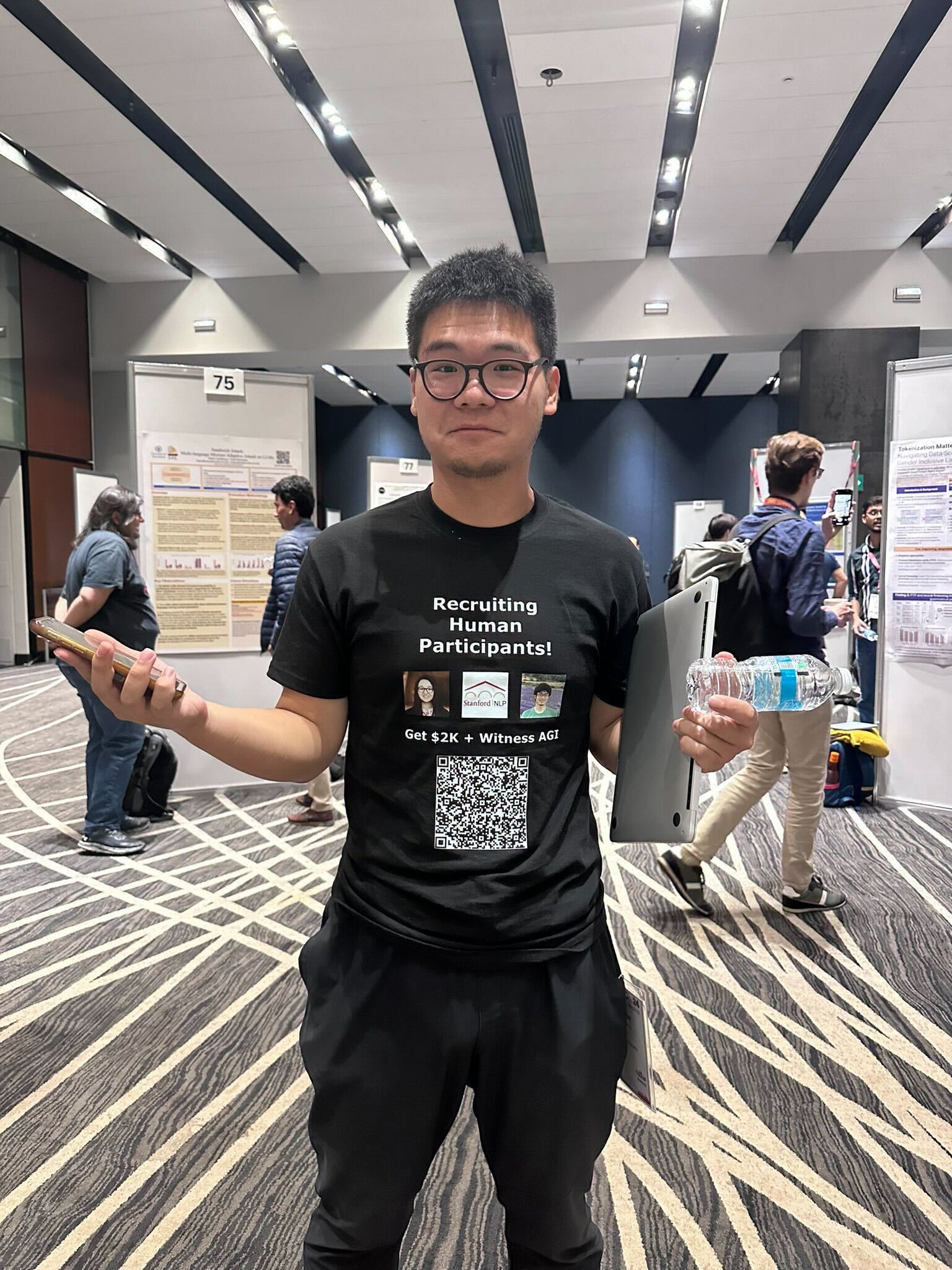
Stanford University
MIT
Ohio State University

Georgia Institute of Technology

University of Washington
University of Pennsylvania

Ohio State University

Stanford University
Bringing Communities Together
The focus of our workshop is on developing LLMs and AI systems that can accelerate scientific research in various scientific domains and assist human researchers. We aim to bring together researchers from different communities, including ML, NLP, Human-Computer Interaction, and various scientific disciplines such as biology and chemistry, to work together on the design, development, and evaluation of various forms of scientific LLMs and systems.
Many of these AI systems are shown to be helpful tools for human researchers to accelerate the scientific discovery process. For example, systems like Scideator provide assistance such as key facet extraction from papers and automated novelty assessment with explanations to facilitate ideation. Beyond these simple collaboration modes, there is still a huge under-explored space for building helpful AI tools for accelerating scientific research and fostering more effective human-AI collaboration in science.
Submit your research to be part of this exciting workshop exploring the future of science and human-AI interaction.
Submit Your Paper| Time | Activity |
|---|---|
| The 2026 schedule will be announced closer to the workshop date. | |
Note: This schedule is tentative and subject to change. See the full schedule for details.